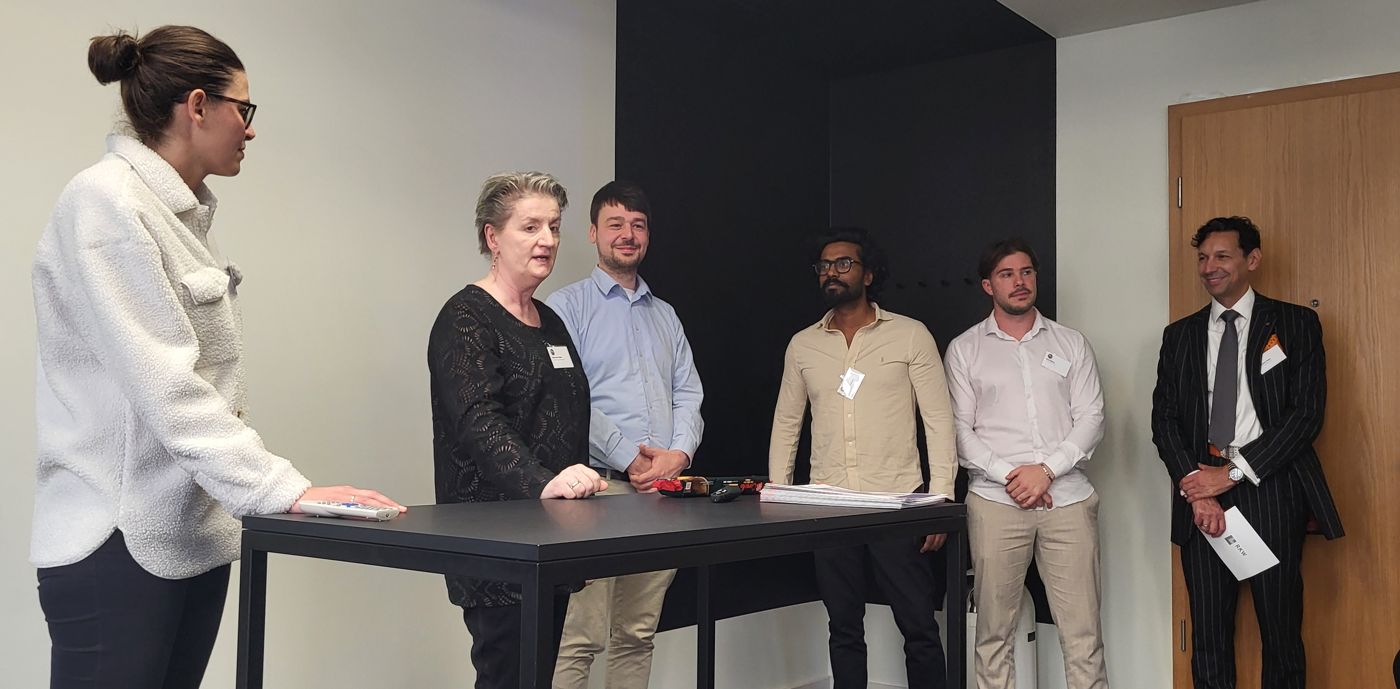
On 12 November 2026, the RKW Kompetenzzentrum brought its annual event RKW IMPULSE to Berlin. In the workshop “Mittelstand und Start-ups – Wege der Zusammenarbeit”, the team presented first results of the new study “Mittelstand meets Startup 2026” – and the new Cooperation Canvas, which we developed together. Here is what I took away.
All figures from: Ahluwalia, R.; Wallisch, M. (2026): Mittelstand meets Startup – Potenziale der Zusammenarbeit 2026. RKW Kompetenzzentrum, Eschborn. Page numbers refer to the study.
The study in six numbers
Since 2017, the RKW Kompetenzzentrum has surveyed small and medium-sized companies about working with startups. For the fifth edition, 400 SMEs from machinery and vehicle construction, ICT, chemicals and pharma, and – new – energy were interviewed in summer 2026, plus 47 startups p. 8.
- 53 %of SMEs cooperate or have cooperated with startups2023: 42 % · p. 21
- 74 %are in contact with startups2023: 58 % · p. 12
- 39 %have a dedicated person or position for startup cooperation2023: 16 % · p. 40
- 74 %reached their cooperation goals fully or largelyp. 35
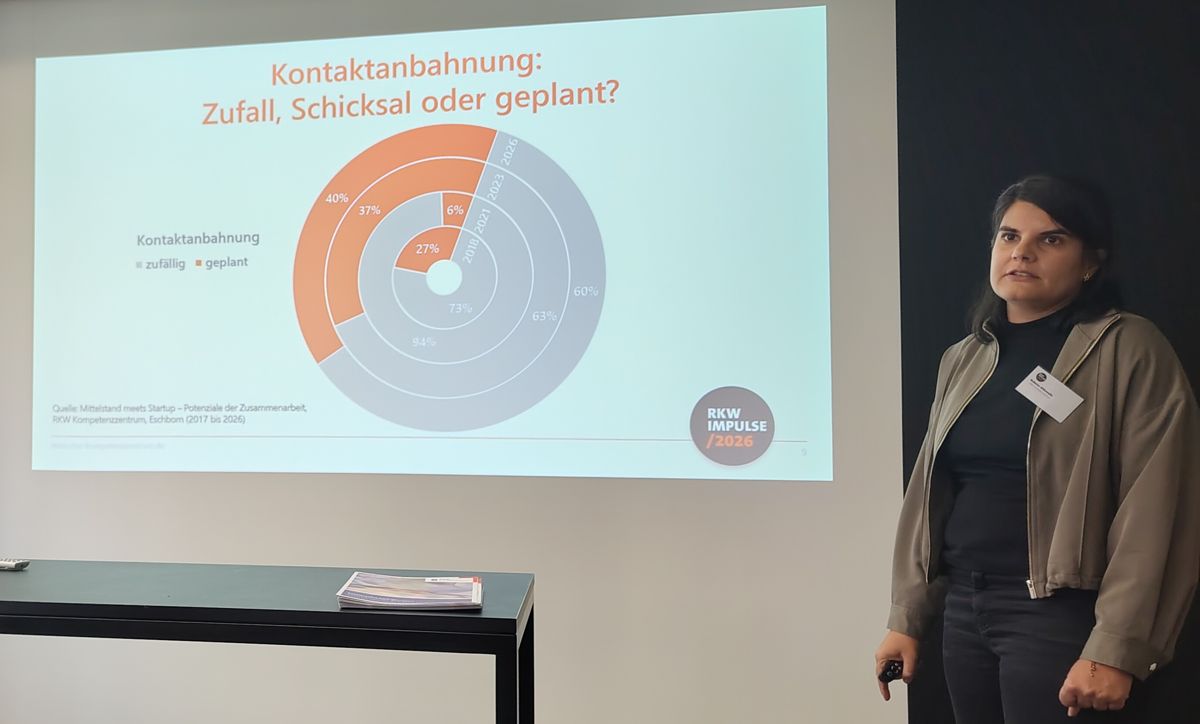
- 60 %leave the first contact to chancep. 15
- 5 %use venture clientingp. 27
The 2023 comparison for contacts is derived from the share without contact (42 % in 2023, 26 % in 2026) p. 12.
Explore the results
Share of SMEs with startup cooperation experience. 2026 includes energy as a fourth industry; without it the share is 56 % p. 21.
Contact routes that led to a cooperation, multiple answers, n=210 p. 16.
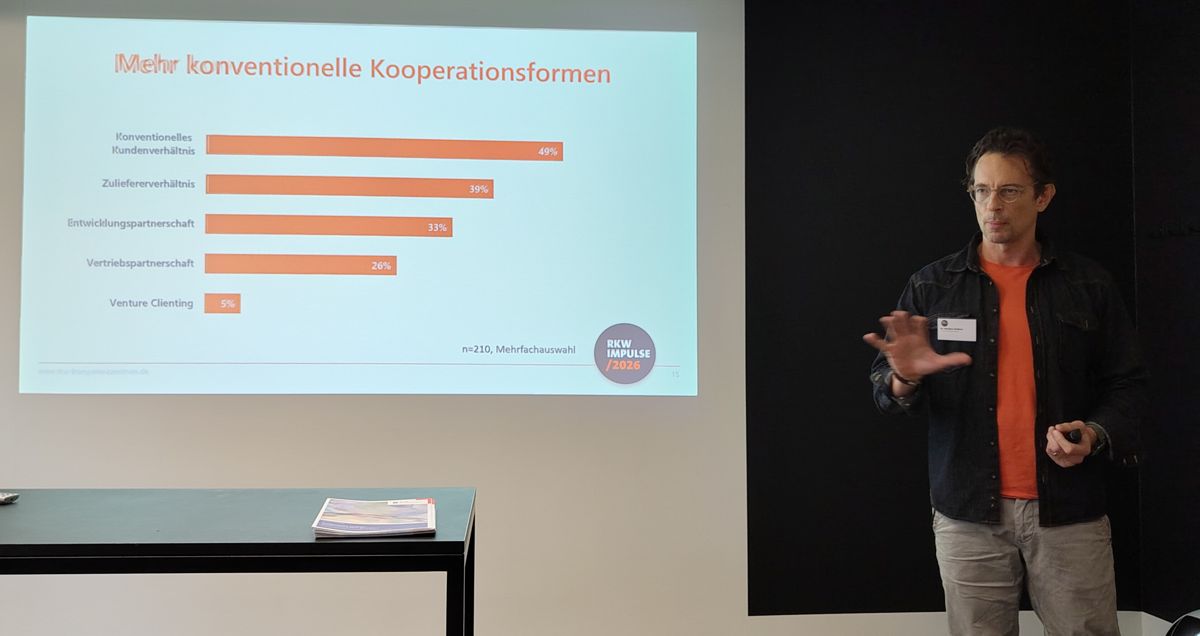
Forms of cooperation chosen, multiple answers, n=210 p. 27.
Share rating a motive as “very highly relevant”, n=346 p. 31.
Who initiates and runs startup cooperations, 2026, n=298. In 2023, only 16 % had a dedicated person or position p. 40.
Five takeaways
1. The Mittelstand opens up
For years, the share of SMEs with startup cooperations stayed between 36 and 42 %. In 2026 it jumped to 53 % p. 21. The study’s verdict: the narrative of a defensive Mittelstand can hardly be confirmed any more p. 10. Interestingly, the startup side shows the opposite trend: according to the Deutscher Startup Monitor, the share of startups cooperating with established companies fell from 72 % in 2020 to 54 % in 2026 – mostly with large corporates in mind p. 21.
2. Meeting each other is still left to chance
60 % of SMEs do nothing specific to meet startups p. 15. Those that do meet them more often – and cooperate more often. Events and trade fairs remain the most successful route (51 %), followed by own research (36 %) p. 16.
3. Clear responsibility makes the difference
39 % of SMEs now have a person or position responsible for startup cooperation – up from 16 % in 2023 p. 40. Companies with clear responsibilities cooperate more often than those with decentralised or no rules p. 6.
4. Innovative goals, pragmatic forms
Developing an innovation is the top motive (42 %) p. 31. Yet the most common forms are pragmatic: buying from startups as a customer (49 %) or as a supplier relationship (39 %). Development partnerships reach 33 %, venture clienting only 5 % p. 27. Still, three quarters reach their goals fully or largely p. 35, and more than 80 % would work with a startup again p. 38.
5. AI changes the picture
SMEs that rate artificial intelligence as highly relevant have cooperation experience far more often: 64 % compared with 42 % p. 6. The study sees AI also as a lever for better matching of company challenges and startup solutions p. 51.
From the workshop: the fishbowl
In the fishbowl, I shared my experience from many cooperation projects between companies and startups. The open discussion covered, among other things:
- Public support: how the public sector and funding programmes can strengthen cooperation between the Mittelstand and startups.
- Time for innovation: leaders need to make room for innovation in their daily work – and visibly back the topic.
- Needs first: companies should identify their needs, strategic fields of action, problems and challenges before they look for partners.
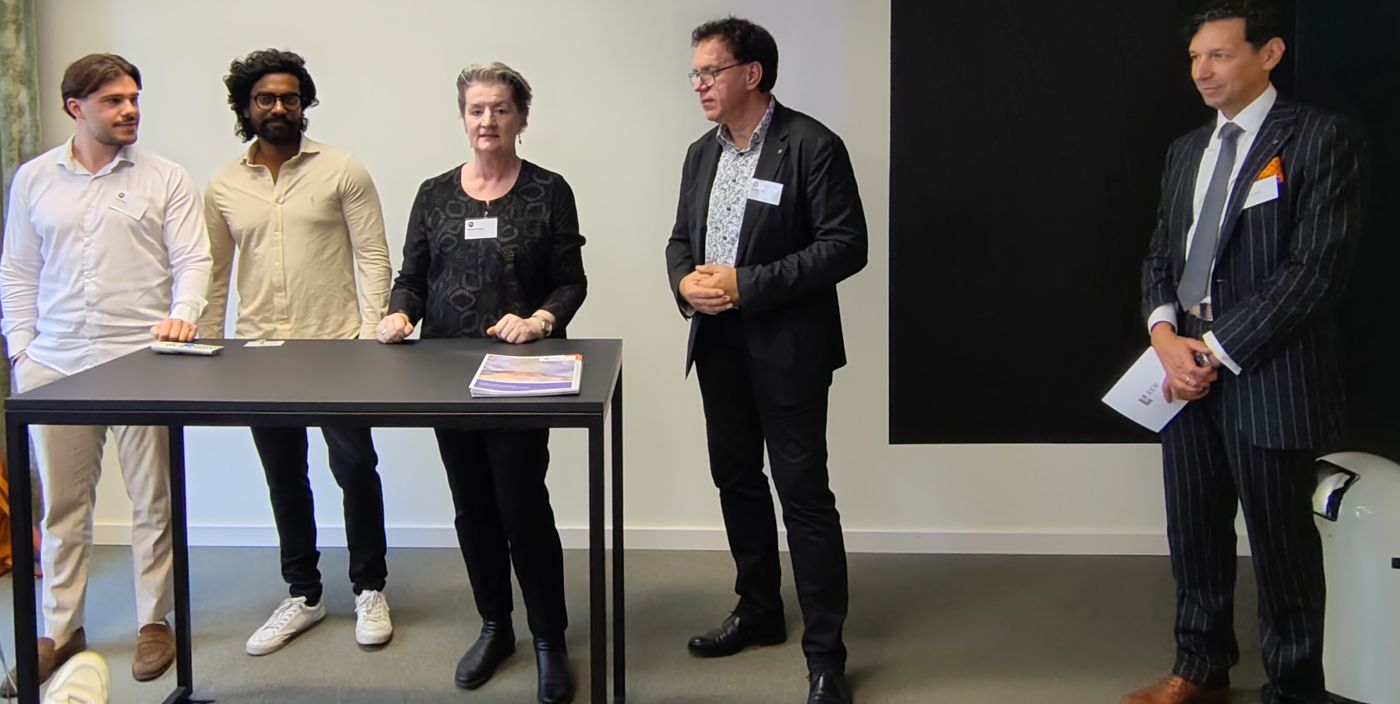
Practice case: Sautter Lift Components and K-Intelligence. The AI startup K-Intelligence (co-founder and managing director Noah Öztunc, CTO Sinthujan Senthilrajah) reached the lift component maker SLC Sautter Lift Components (managing director Alexandra Sautter) by cold call – a charming call that sparked Sautter’s interest. A personal meeting on site at Sautter, close by in the same region, then convinced them. Baden-Württemberg’s innovation voucher “Mittelstand trifft Start-ups” made it possible to start right away instead of pushing the project into the next year. Gernod Kraft, managing director of RKW Baden-Württemberg, supported the partners, helped with the application and built trust between both sides. Both are very satisfied with the progress so far.
Eva Jacob, CEO and co-founder of ankerkern, shared how she supports Mittelstand companies with artificial intelligence. One example is the construction company Brumm Bau from Meissen: an AI agent reads incoming inquiries, creates project folders, prices tender items based on past calculations and flags risks – while the team keeps the final decision on every offer (case study).
My take
5 % venture clienting does not surprise me. The term is still new for many SMEs. In practice, venture clienting is close to a customer relationship – a company buys a startup’s solution to solve a concrete problem. Many SMEs already do something similar without calling it venture clienting.
My advice to the Mittelstand: work on your needs and search fields first. And try new technology yourself – at home, with friends, in small experiments. That makes it much easier to judge what a startup can really do for you.
My thesis: AI accelerates cooperation. AI changes so much, so fast, that every company has to ask: do we have this competence in-house – or does it make more sense to work with partners, for single problems or for the topic as a whole? One example from our projects: data-protection-compliant use of large language models is a big topic, and many companies rely on tools like Langdock from Berlin.
The Cooperation Canvas – now with the RKW
Many cooperations fail not on technology, but on unclear expectations. That is why I developed the Co-Canvas at Ambivation: a one-page template, inspired by the Business Model Canvas, that both partners fill in together. After several iterations, the last Ambivation version dates from 2024.
The RKW Kompetenzzentrum approached us to develop it further together. The result is a new German edition – revised in content, much more appealing visually, and available both digitally and as a folded print version with instructions, handed out at the event. Many thanks to Matthias, Rabena and the team for this great work.
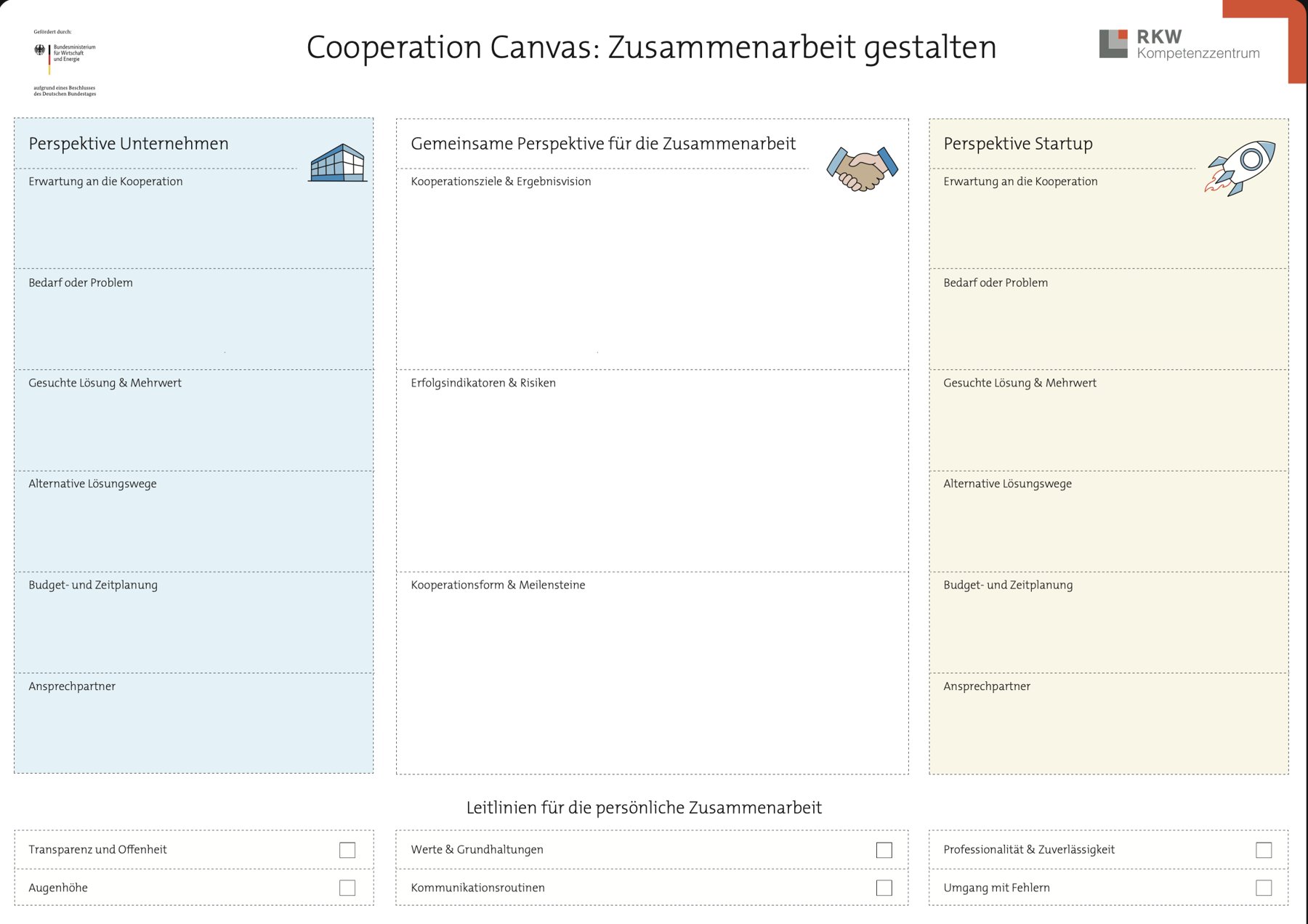
The canvas works in three steps:
- Own perspective: company and startup each describe their expectations, needs, the solution they look for, alternatives, budget and time plan, and contact persons.
- Shared perspective: together they agree on cooperation goals and vision, success indicators and risks, form of cooperation and milestones.
- Personal factors: values, communication routines, transparency, working on equal terms, reliability – and how to deal with mistakes.
The study itself recommends the canvas as a systematic way to set up cooperations p. 54.
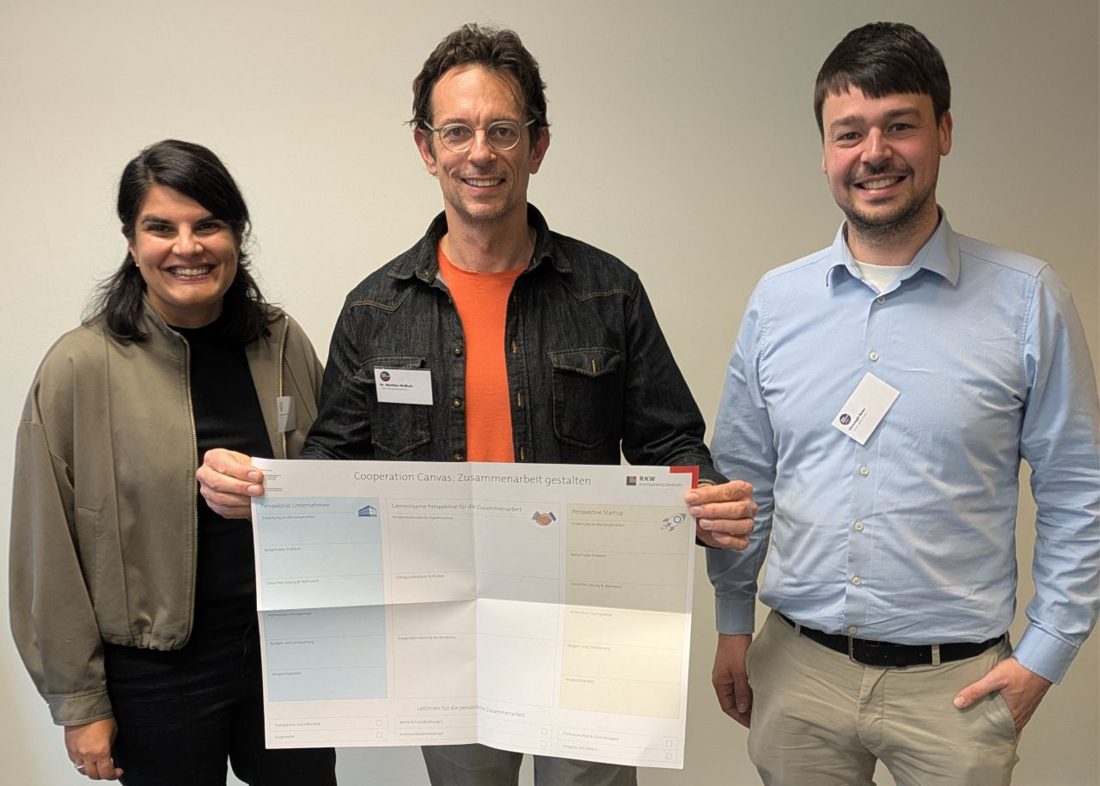
The RKW announced the new canvas on LinkedIn – and thanked Ambivation for the opportunity to develop it further and for the constructive collaboration (post).
Ten years of working together
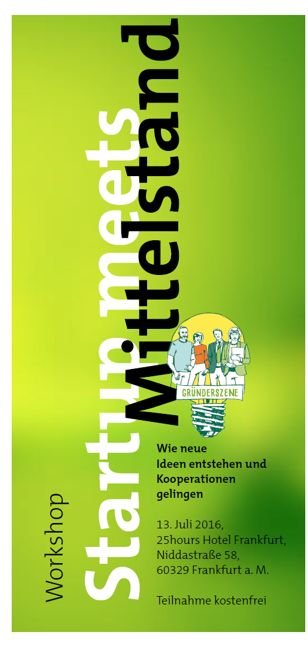
It started in July 2016 with the RKW workshop “Startup meets Mittelstand” in Frankfurt. Matthias Wallisch recently looked back on it in a LinkedIn post.
Since then, we have worked together, exchanged a lot, learned a lot together and built trust – exactly the kind of long-term partnership that good cooperations between companies and startups need as well.
Thank you, Matthias, Rabena, Florian and the whole RKW team.
How it all began: my 2016 article Startups and the Mittelstand: flash in the pan or a real driver of digital transformation?
Read, listen, download
- Study “Mittelstand meets Startup 2026” (German, PDF)
- Cooperation Canvas – free download or printed copy
- RKW blog: Der Mittelstand öffnet sich!
- Podcast Gründungsupdate with Rabena Ahluwalia, Martin Deschauer and Matthias Wallisch
- RKW IMPULSE 2026 – programme of the event
- Ambivation Co-Canvas (English, 2024)
Want to set up a cooperation with startups? Get in touch or connect on LinkedIn.